The Science Behind Freeze-Drying: How 97% of Nutrients Are Preserved
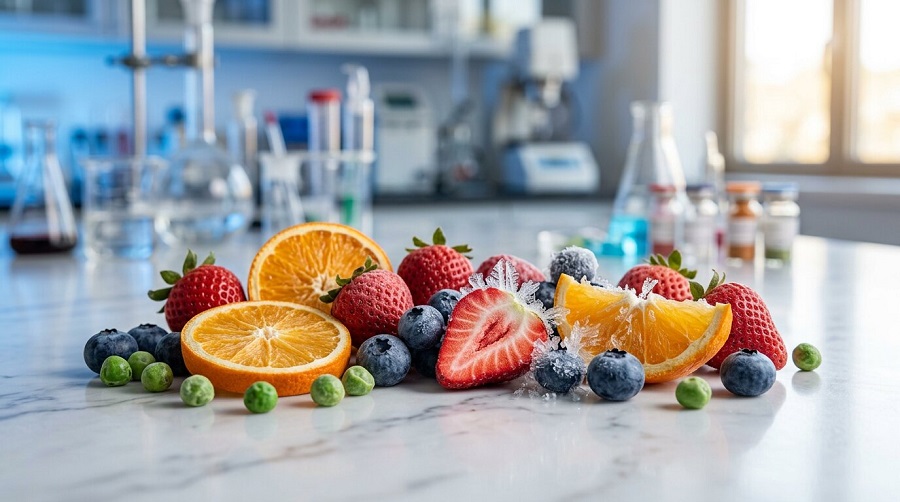
When you freeze-dry food, you remove water without exposing it to the high heat that strips away nutrients. By freezing it quickly and removing moisture through sublimation, you preserve cellular structure, flavor, and up to 97% of key vitamins and minerals. Here is what happens during each stage and why it matters.
What Is Freeze-Drying?
Freeze-drying, or lyophilization, is a dehydration process that removes water by freezing food and converting ice directly to vapor through sublimation.
The food is rapidly cooled to about -40°C to -50°C, forming small ice crystals that help preserve cellular structure and reduce texture damage. It is then placed in a vacuum chamber at pressures around 0.1 to 0.3 millibars, where controlled, gentle heat causes the ice to sublimate from solid to vapor without passing through a liquid phase. This primary drying stage removes around 90-95% of the water. A condenser maintained at below -50°C captures the released vapor.
A secondary drying phase follows, gradually increasing temperature under continued vacuum to remove residual bound moisture, reducing it to approximately 1-5%. The final product retains only about 10-20% of its original weight.
How Does Freeze-Drying Preserve Nutrients?
Because freeze-drying uses very low temperatures and a vacuum rather than sustained heat, it typically retains a higher percentage of nutrients than conventional hot-air drying. This is why products like ANTARTA Space Food rely on this process to maintain both nutritional value and quality during long-term storage.
The low-temperature environment minimizes heat-induced degradation of heat-sensitive compounds. Sublimation also limits oxygen exposure, reducing oxidation and other reactions that damage nutrients. Studies commonly report high retention of proteins and minerals (often above 90%) and relatively high retention of many B vitamins compared with traditional drying methods.
Rapid freezing forms smaller ice crystals, helping maintain cell structure and reducing physical damage to the tissues where vitamins are stored. Vitamin C, which is particularly sensitive to heat and oxygen, is better preserved by freeze-drying than by hot-air drying, though actual retention depends on the specific food, processing conditions, and storage conditions.
Freeze-Drying vs. Dehydration: Which Is Better?
If retaining nutritional value is a priority, freeze-drying generally performs better. Water is removed via sublimation at temperatures below -40°C, limiting heat-related nutrient losses.
In contrast, dehydrating fruit at typical temperatures of 50-70°C relies on warm air, which can damage cell structure, reduce flavor intensity, and cause substantial losses of vitamins C and some B vitamins. Nutrient losses during conventional dehydration can range from moderate to high, depending on the food, time, and temperature.
Freeze-dried fruit maintains its original shape, color, and crisp, airy texture. Its porous structure allows it to rehydrate well and helps keep its nutrient profile closer to that of fresh fruit. Actual retention in both methods varies based on equipment, processing conditions, and the type of food used.
How Long Does Freeze-Dried Fruit Last?
When stored under ideal conditions, freeze-dried fruit can remain shelf-stable for up to 20-25 years. For maximum longevity, seal it in airtight, moisture-proof packaging such as Mylar bags with oxygen absorbers, and store in a cool, dark, dry place.
Freeze-drying removes most of the fruit's water, leaving only about 1-5% moisture. This low moisture level significantly slows microbial growth, oxidation, and enzyme activity. Limiting oxygen exposure further protects flavor, color, and nutrients over time.
Conclusion
Freeze-drying preserves up to 97% of key nutrients by removing ice through sublimation at low temperatures, avoiding the heat damage common in conventional drying. Compared with standard dehydration, the result is better nutrient retention, longer shelf life, and lighter, crispier food.